How It Works: The Difference Between Conventional and Agent-Based AI
The digitization of the healthcare system continues to face structural challenges: a shortage of skilled workers, high administrative burdens, and insufficient integration of clinical data are straining healthcare delivery. Against this backdrop, the German National Academy of Sciences Leopoldina is investigating the use of agent-based artificial intelligence.
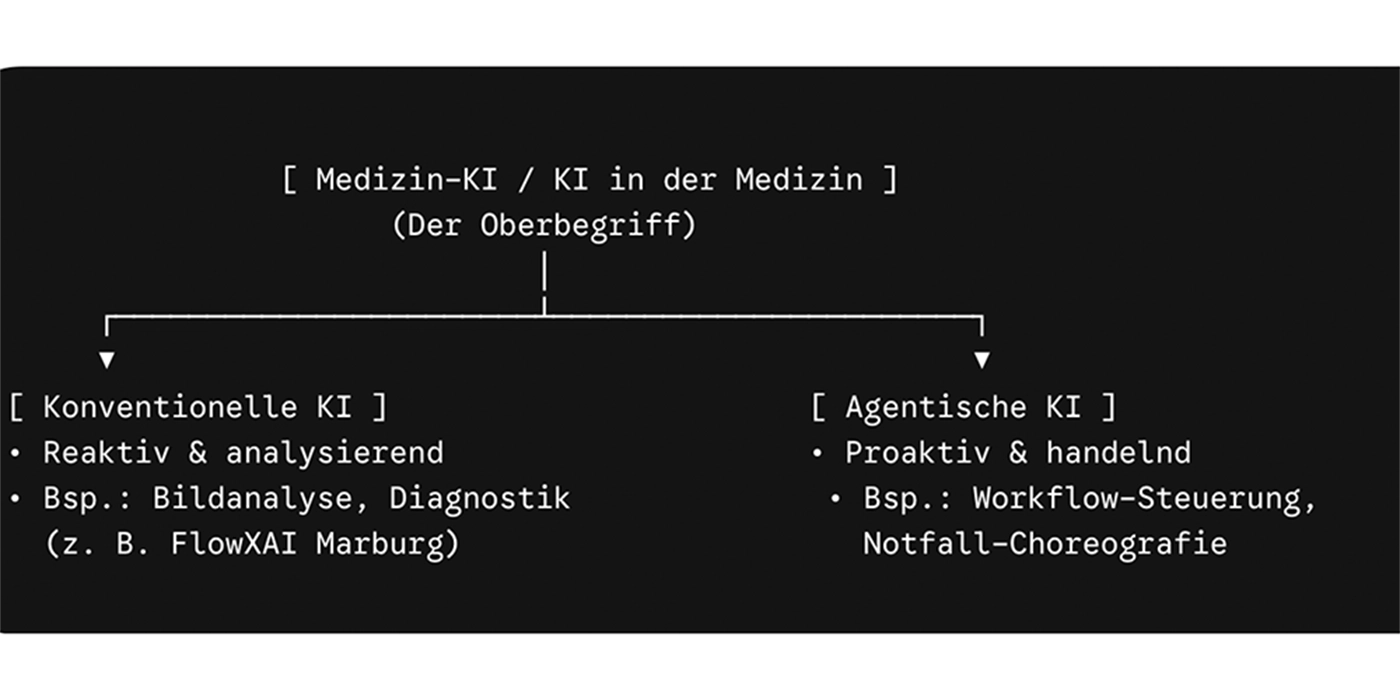
Compared to AI applications used to date, agent-based AI differs primarily in its scope of action:
- Conventional AI systems operate reactively. They perform specific, predefined tasks—such as identifying structures in medical images or conducting statistical analyses of datasets—and provide recommendations to staff.
- Agent-based AI systems operate proactively. They are typically based on large language models (LLMs) combined with domain-specific foundation models. These systems can automate processes based on medical guidelines, standard operating procedures (SOPs), or medication rules.
In clinical practice, this means that in the event of an acute heart attack, agent-based AI would no longer simply make the diagnosis. It would immediately alert the treatment team, propose a guideline-based therapy, monitor vital signs in real time, and independently coordinate follow-up appointments and rehabilitation during the post-treatment period. In oncology as well, AI could in the future create personalized treatment plans based on molecular genetic tumor analyses and manage preliminary examinations.
Current Applications in Pharmaceutical and Clinical Practice
In medical and pharmaceutical research, data-driven and agent-based systems are already being used for specific subtasks:
- Molecular drug discovery: Bayer is using the AI platform developed by Iambic Therapeutics to identify small molecules that specifically target hard-to-reach protein structures using structure prediction models. The Chan Zuckerberg Biohub released ESMC and ESMFold2, AI models for calculating and predicting protein interactions.
- Reducing Clinical Trial Dropouts: The startup Verge Labs uses the vBx-1.0 model to simulate molecular activity in the brain based on blood samples. The goal is to determine in advance, for neurological diseases such as Parkinson’s, which patients will respond to specific drugs, in order to reduce high dropout rates in clinical trials.
- Research Platforms: With Claude Science, Anthropic provides a software environment that links data from genomics, proteomics, and cheminformatics with scientific literature to enable centralized analysis of research workflows. Bristol Myers Squibb uses NVIDIA’s supercomputing infrastructure to run data-intensive analytical models in oncology and immunology.
- Safety Assessments for Language Models: OpenAI had the GPT-5.5 Instant model evaluated by doctors using standardized criteria (HealthBench). The goal is to ensure that the model provides more accurate answers to users’ medical questions and identifies emergencies more reliably.
Security Risks: Data Protection, Traceability, and Cybersecurity
The use of autonomous systems in the medical field entails specific risks, as highlighted by both the research community and the Leopoldina:
1. Re-identification Due to Data Protection Gaps
A study by the Technical University of Munich (TUM), Imperial College London, and the Hasso Plattner Institute, published in the journal *Nature*, shows that medical AI models are vulnerable to so-called membership inference attacks (MIAs). Using this method, attackers can determine whether a specific person’s data was used to train the model. This risk particularly affects rare medical conditions or underrepresented patient groups, which can be identified with near certainty. If third parties can draw conclusions about diagnoses, those affected may face disadvantages, such as when taking out insurance policies. The researchers are calling for the use of protective measures such as differential privacy, in which noise is incorporated into the training data.
2. Traceability (“Black Box Problem”)
To ensure that decisions remain understandable to medical staff, AI models must operate transparently. One example of this approach is the FlowXAI system developed by the University of Marburg for diagnosing B-cell lymphomas. The system not only displays the diagnostic result but also reveals which cell characteristics were decisive and rates its own reliability in categories such as “certain,” “probable,” or “difficult.”
3. Systemic and Organizational Risks
The Leopoldina also points to the risk of “deskilling,” in which medical staff lose practical skills due to excessive automation. Furthermore, AI agents’ autonomous access to clinical databases increases the attack surface for cyberattacks. There is also a structural conflict of objectives: To avoid biases in the algorithms, large amounts of data are required, which in turn places high demands on data protection.
Regulatory Framework and Legislation
To reduce dependence on non-European providers, the Leopoldina recommends making domain-specific AI models for medicine a priority in the German federal government’s high-tech agenda. In addition, regional centers of excellence should be established, and collaboration between university hospitals and industry should be facilitated.
From a legal perspective, the Academy calls for a pragmatic application of the General Data Protection Regulation (GDPR). Data protection should not be interpreted one-sidedly as a right to prevent action if doing so would undermine the goal of ensuring a high level of health protection. Legal requirements must be designed in such a way that processes run efficiently, while the final decision and responsibility remain demonstrably with healthcare professionals (Legal Design Thinking).
At the same time, the legal framework is changing:
- National: The Federal Cabinet has approved the draft of the Act on Data and Digital Innovation in Healthcare (GeDIG). It provides for the expansion of the electronic patient record (ePA), the introduction of digital referrals, and the simplified use of health data for care and research purposes.
- European: The European Medicines Agency (EMA) uses AI applications to support its evaluations and highlights the importance of regulated data spaces such as DARWIN EU and the European Health Data Space (EHDS). Together with the EU AI Act, the goal is to ensure that AI-driven developments meet quality and safety standards.
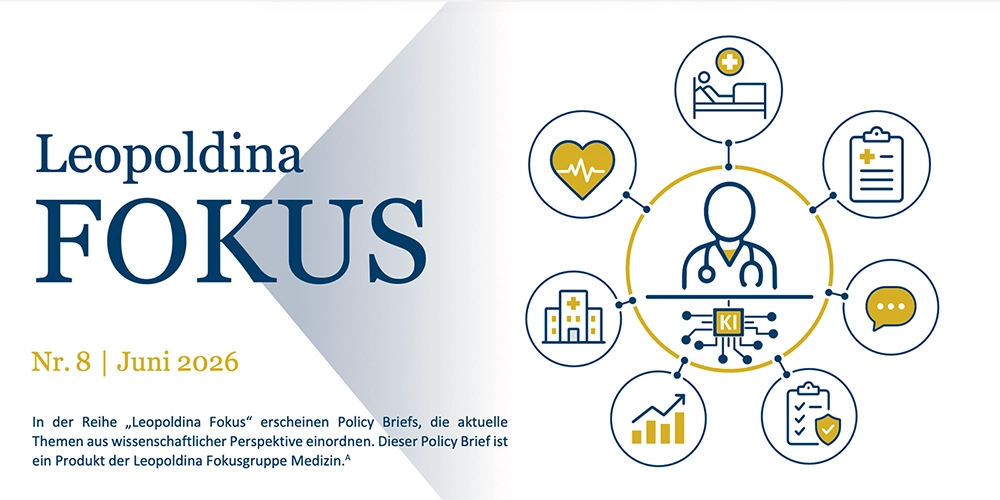
The conclusion in “Leopoldina Fokus” is:
“The integration of agent-based AI into the healthcare system is not a distant future scenario, but is already taking shape. Agent-based AI has the potential to improve the quality of care while simultaneously reducing the workload on medical and administrative staff. Therefore, the conditions for its responsible use should be established now. This requires effective funding strategies, a clearly defined legal and ethical framework, and a well-developed, interoperable, and resilient digital infrastructure. Agent-based AI systems offer concrete approaches for structuring processes in medical research and healthcare organizations and relieving specialized staff of administrative tasks.”
“Artificial intelligence is rapidly changing the way drugs are developed and regulated. As a regulatory agency, it is our responsibility to be both pioneers and gatekeepers...”
Emer Cooke, Executive Director of the European Medicines Agency (EMA) (Source: Euractiv Health Policy Conference and AIMed2026)