What will happen after 15 years of AMNOG?
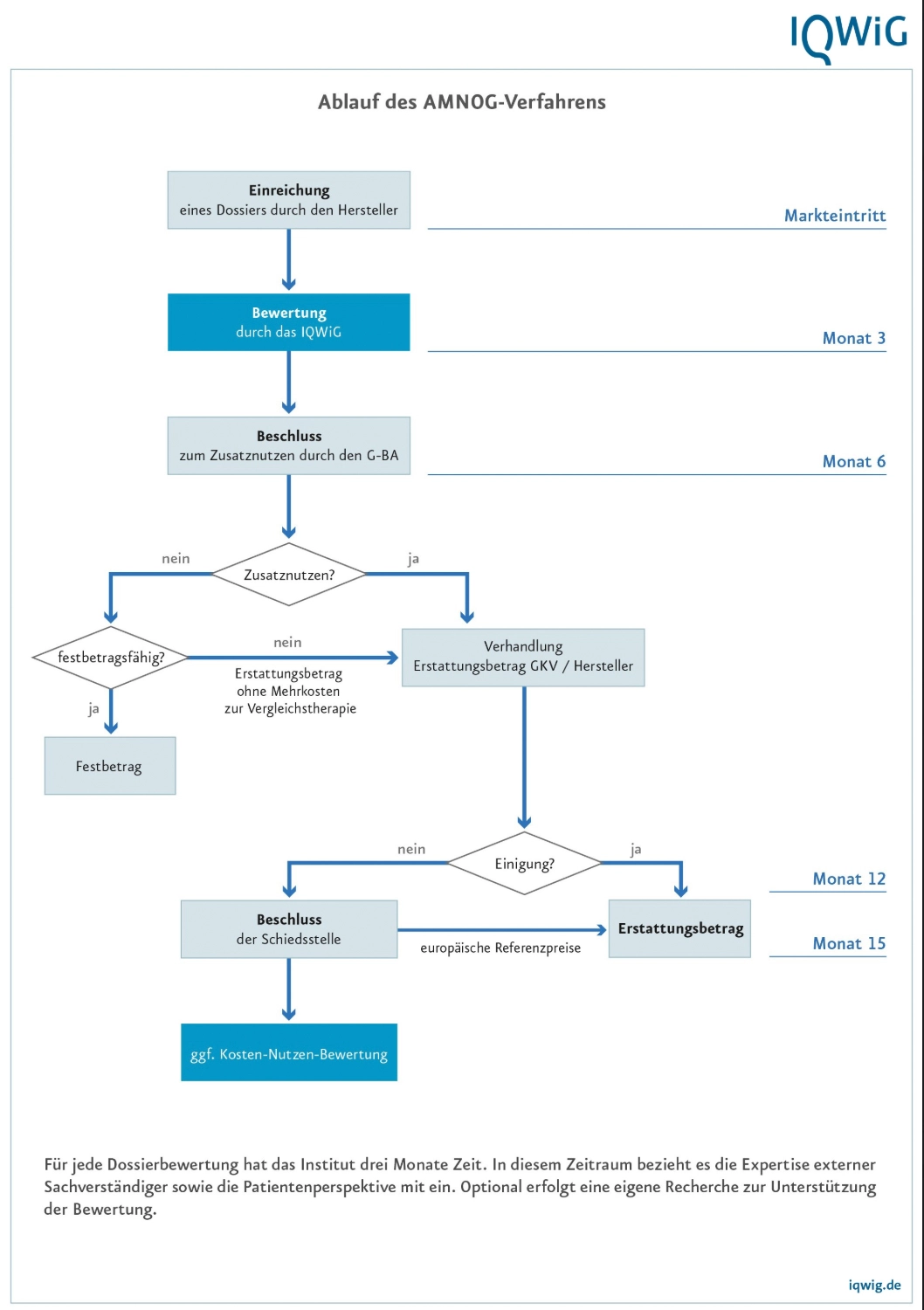
Since 2011, the Act on the Restructuring of the Pharmaceutical Market (AMNOG) has determined the reimbursement prices for new active pharmaceutical ingredients in Germany. The prices are based on the demonstrated additional therapeutic benefit compared to an appropriate comparative therapy.
Proposals from the Federal Ministry of Health (BMG) call for a differentiated approach: The standard procedure for new drugs is to remain largely unchanged. For drugs used in specific therapeutic situations, a mandatory reevaluation is planned after a few years. To this end, healthcare data from the Health Research Data Center (FDZ) will be used, and patients and clinical practice will be more closely involved.
Evidence, Predictability, and Re-evaluations
Health insurance plans and the industry have differing views on the planned introduction of retrospective evaluations:
The pharmaceutical industry is calling for predictability: The Pharma Deutschland association and company representatives oppose evaluation and pricing procedures that are initiated without cause. They point out that the existing AMNOG is already subject to dynamic regulation through indication expansions, temporary decisions by the Joint Federal Committee (G-BA), and expiring contracts. A separate association analysis of the ten AMNOG drugs with the highest sales revealed that their prices were adjusted an average of eight times over a ten-year period, mostly through price reductions. A focus solely on costs and additional hurdles would weaken Germany’s position as a hub for innovation.
The GKV-Spitzenverband adheres to evidence-based standards: The health insurance association emphasizes that accelerated market access must not come at the expense of patient protection. To address data gaps during market launch, the health insurance sector advocates for the structured collection of treatment data in standardized disease registries beginning with approval. These registries are intended to supplement, but not replace, clinical trials.
The Perspective of IQWiG and BfArM
On the occasion of its 1,000th dossier assessment, the Institute for Quality and Efficiency in Health Care (IQWiG) points out that even for common indications (such as acne vulgaris or urticaria), pharmaceutical companies often submit only studies that compare the new active ingredient to a placebo rather than to existing standard therapies. Without a direct comparison, no added benefit can be demonstrated.
The IQWiG demonstrates that meaningful comparative studies are possible even with small patient groups, using the oncology drug blinatumomab (for acute lymphoblastic leukemia in children) as an example: In this case, a randomized controlled trial (RCT) involving 111 children demonstrated significant added benefit. The institute also notes the upcoming European HTA procedures (Joint Clinical Assessments), which will require comparative evidence as early as the time of marketing authorization in the future.
“This dossier review shows once again: It can be done. Meaningful comparative studies can be conducted even for rare diseases. The manufacturers bear the responsibility here.”
Katrin Nink, Division Director in the IQWiG’s Drug Assessment Department, on the A26-60 dossier assessment
Requirements are becoming more stringent at the EU approval level. An analysis by the Federal Institute for Drugs and Medical Devices (BfArM) of oncology approval procedures from 2015 to 2024 shows a significant increase in the frequency of reviews.
The average number of regulatory inquiries in the first review round (List of Questions) rose from about 80 to 130 points per procedure (+60%). The focus was on clinical questions regarding efficacy. The reasons for this include more complex mechanisms of action (e.g., immunotherapies), biomarker-based indications, and novel study designs. Despite the higher review intensity, the processing time for applications within the EU network remained stable over the ten-year period.
Classification
The debate over the further development of the AMNOG touches on three key interests: rapid patient access to new therapies, the financial stability of the statutory health insurance system, and the scientific substantiation of medical benefits. The posts on LinkedIn reflect these conflicting goals.
From the perspective of health insurers, the ability to demonstrate benefit is paramount. Stefanie Stoff-Ahnis, deputy chair of the GKV-Spitzenverband, argues: “Being new alone does not constitute a benefit.” She warns against lowering the standards for demonstrating benefit: “Speed without quality poses a risk to patients.”
The pharmaceutical industry, on the other hand, emphasizes the need for stable regulatory conditions. Alexandra Bishop, President of AstraZeneca Germany, stresses that retroactively downplaying a recognized added benefit is an “enormous source of uncertainty”: “Investment and launch decisions require predictability over many years.”
The decision on the details of the AMNOG reform thus touches on the heart of the health policy debate, which Bishop sums up as follows: “What is medical progress worth to us?”
International Dimension: Medicines as Critical Infrastructure
A recent open letter from the chairpersons of the supervisory boards of nine European pharmaceutical companies (AstraZeneca, Boehringer Ingelheim, Chiesi Group, GSK, Ipsen, Novartis, Novo Nordisk, Roche, and Sanofi) demonstrates that this debate extends beyond Germany. In light of dwindling market shares in research and development compared to the U.S. and China, industry representatives are calling for a fundamental shift in policy:
Instead of treating pharmaceuticals primarily as a cost factor, modern medicine must be classified as critical infrastructure, similar to the energy or defense sectors. To strengthen the country as an investment destination and reduce delays in supply, industry leaders are calling for accelerated clinical trial procedures, reliable protection of intellectual property, and greater fiscal flexibility for government health care investments.