Greater personal responsibility and flexibility in operations
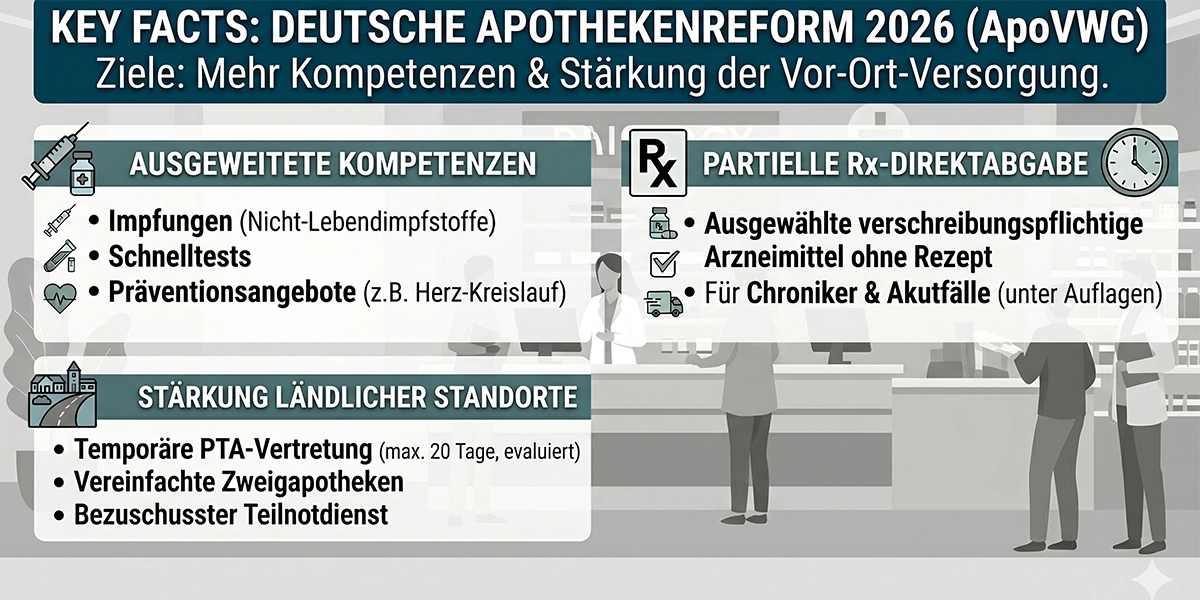
To counter the acute shortage of qualified staff and the closure of pharmacies, the law provides for significant simplifications in day-to-day pharmacy operations. In the future, chain and branch pharmacies may be jointly managed by two people through flexible work schedules. In addition, in rural areas, experienced pharmacy technicians will be able to temporarily maintain operations if the regular manager is unavailable.
There will also be changes to emergency services: In addition to full emergency services, partial emergency services during the evening hours will also be subsidized in the future. At the same time, quality standards for mail-order pharmacies will be tightened, particularly with regard to the transport of temperature-sensitive products.
Sharp Criticism from Doctors in the Public Health Insurance System and the Opposition
The new regulation met with fierce resistance both in the run-up to and during the debate. The National Association of Statutory Health Insurance Physicians (KBV) sharply criticized the expansion of pharmacies’ scope of practice and, in a press release, referred to it as a “Youth Research Program.” From the medical community’s perspective, shifting diagnostic services and vaccinations to pharmacies would lead to inefficient duplicate structures and jeopardize patient safety.
Criticism also came from the opposition parties: While the Greens called the law “dishonest” and warned of an additional burden on health insurance companies, The Left criticized the fact that the structural problem facing pharmacies was merely being postponed by the delayed fixed fee surcharge.
Focus on Pharmaceuticals: What Does the Over-the-Counter Dispensing of Prescription Drugs Mean for the Industry?
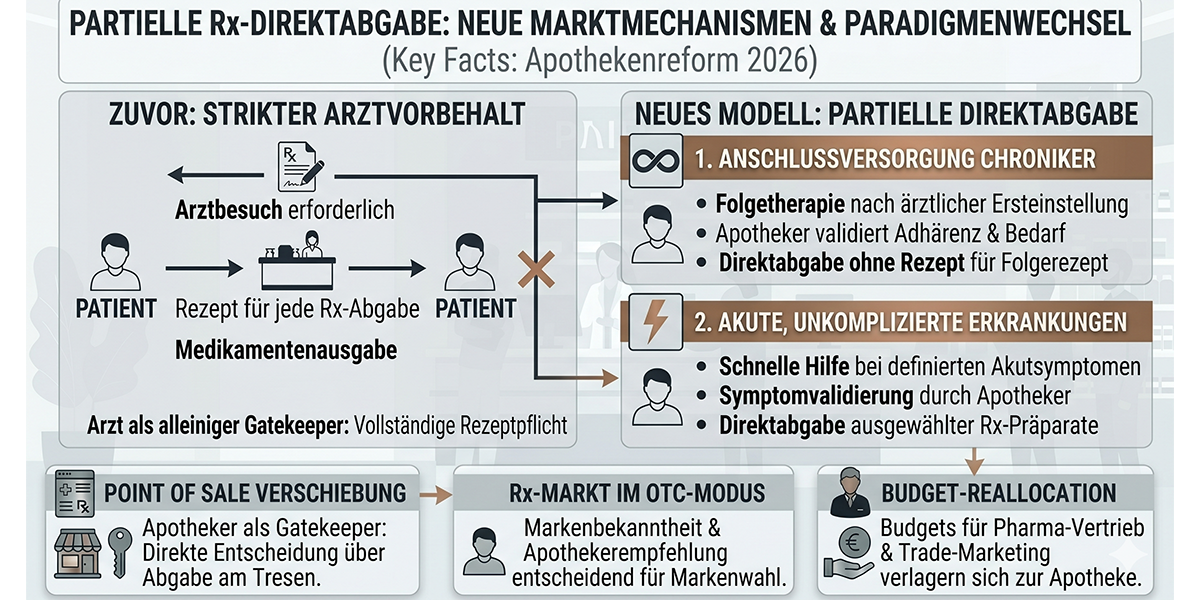
The partial repeal of the strict requirement for a doctor’s referral for follow-up care for chronic conditions, as well as for certain acute, uncomplicated illnesses, is reshaping the commercial market mechanisms of the German Rx segment. Here are a few aspects:
1. Realignment of the point of sale and reallocation of budgets
With physicians no longer serving as the exclusive gatekeepers in the approved indication areas, the primary target audience structure in pharmaceutical sales is shifting.
▪ Shift in “share of voice”: Marketing and sales budgets, which until now have been focused primarily on the medical community (general practitioners and specialists), must be partially reallocated. The local pharmacy is evolving from a mere logistics provider and dispensing outlet into a direct decision-maker regarding treatment.
▪ Restructuring of the field sales force: The traditional Rx field sales force targeting hospitals and medical practices is losing relative importance for the products in question. In contrast, key account management for pharmacies and trade marketing are gaining strategic importance. Manufacturers must establish comprehensive networks at the pharmacy level to ensure that their products are stocked and given preferential treatment.
2. Convergence of Rx and OTC Market Dynamics
In the future, products covered by the new direct-to-consumer sales regulation will be subject to mechanisms in everyday pharmacy practice that have until now been known almost exclusively from the consumer healthcare and OTC sectors.
▪ Dominance of the pharmacist’s recommendation (“Pharmacist Recommendation”): For acute conditions, the relationship of trust between the patient and pharmacy staff determines the choice of brand. Establishing strong brand equity (brand identity) at the pharmacy level is becoming a critical competitive factor in the Rx segment.
▪ Focus on medical training and point-of-care materials: Since pharmacists are responsible for validating indications and continuing treatment on their own, there is a growing need for evidence-based guidelines, contraindication checklists, and training programs. One opportunity for pharmaceutical companies is to offer precise and easily integrable services (e.g., digital tools or certified continuing education programs).
3. Optimizing the Patient Journey and Ensuring Adherence
From the perspective of patient and data management, the reform offers concrete opportunities to stabilize revenue through improved compliance.
▪ Reducing treatment discontinuation: Eliminating barriers in the patient journey—such as waiting times for a doctor’s appointment solely to obtain a refill prescription—lowers the dropout rate for chronic conditions. This increases the likelihood of uninterrupted continuation of medication therapy.
▪ Increased brand loyalty through convenience: Patients who can easily obtain a medication directly from the pharmacy develop a stronger attachment to that specific medication. For both innovative pharmaceutical companies and generic drug manufacturers alike, the challenge now is to support this changing customer journey through targeted patient education programs in order to solidify brand preference even before the patient visits the pharmacy.