Scope and Methods of Automated Health Tips
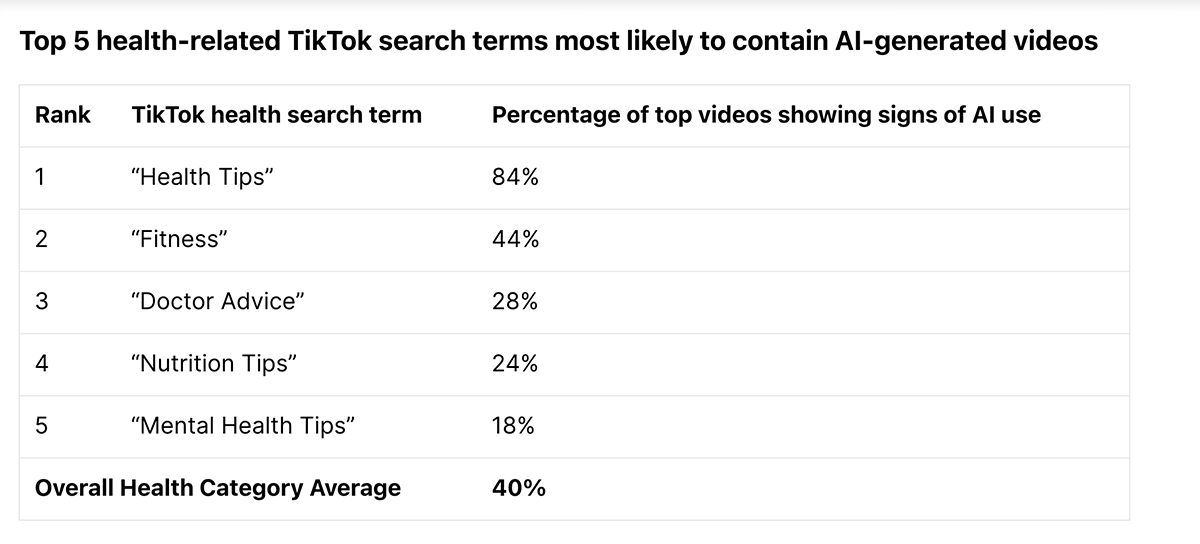
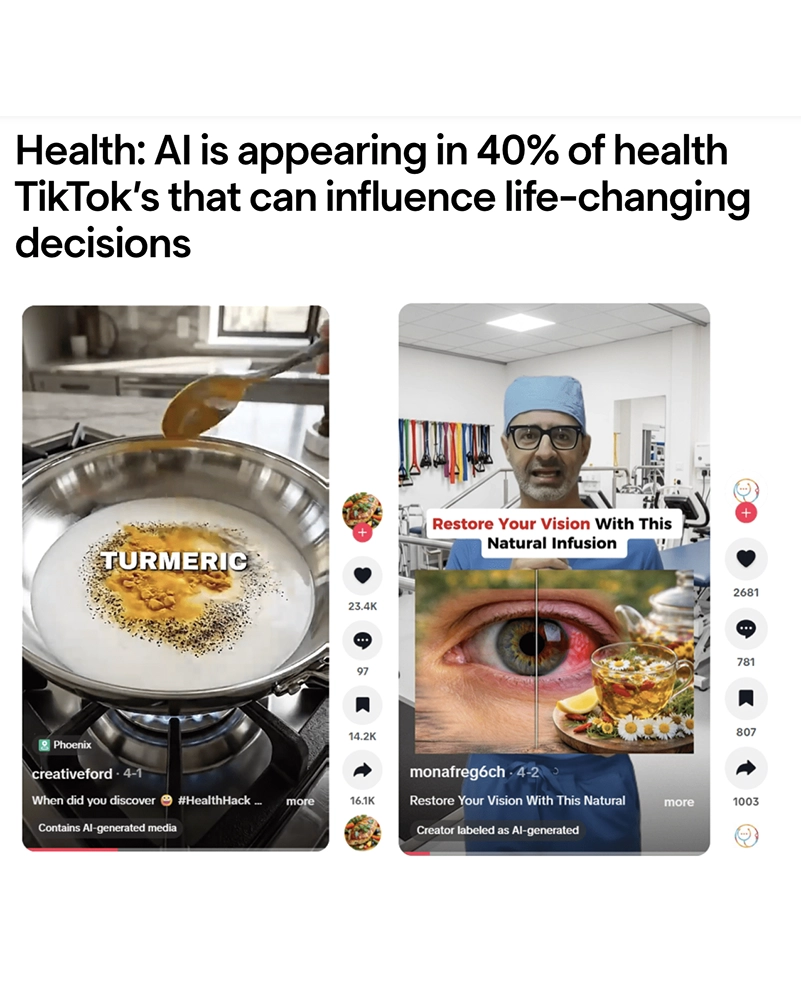
A data analysis of 1,198 TikTok videos conducted by the British digital agency Hallam revealed that, for general health-related search queries, about 40% of the posts with the highest reach came from AI-generated or AI-assisted profiles. For specific search terms such as “Health Tips,” this share reached as high as 84%. The most-viewed videos of this type averaged 2.5 million views.
This content is created through a cost-effective, scalable production process. Marketing agencies—including those based in China—use specialized software to generate hundreds of short videos per day at a unit price of about ten U.S. dollars. The people shown do not exist; their voices, appearances, and visual backgrounds—such as office spaces with fake diplomas—are generated entirely digitally.
The Business Model: The U.S. vs. Europe and Germany
The potential uses and objectives of these video clips vary significantly depending on the legal framework of the target markets.
United States: Direct product sales and aggressive advertising
- In the U.S., this technology is subject to relatively lax regulations governing dietary supplements (the Dietary Supplement Health and Education Act of 1994) as well as the authorization of direct-to-consumer advertising of pharmaceuticals.
- Investigative reporting by The New York Times shows that U.S. consumers are being specifically targeted with AI-generated advertising videos. (One affected person even demanded, “You want real truth in advertising.”)
- The avatars pose as medical professionals or naturopaths to promote dietary supplements for specific conditions such as autoimmune diseases, kidney problems, or joint pain.
- These products are typically sold through anonymous limited liability companies (LLCs) and e-commerce platforms. In several cases, such products have led to regulatory intervention, such as by the U.S. health agencies FDA and CDC, following Salmonella contamination in plant-derived products that were being sold.
Germany and the EU: Gray Areas and Indirect Marketing
- In Germany and the European Union, legal frameworks such as the German Law on the Advertising of Medicines (HWG), the EU Health Claims Regulation, and the German Law Against Unfair Competition (UWG) prohibit direct claims of therapeutic efficacy for non-medicinal products. Mandatory proof of efficacy severely restricts direct e-commerce marketing of dietary supplements.
- However, investigations by Deutschlandfunk (the “Medfluenced” podcast series) and analyses by consumer advocacy groups show how AI avatars and real medfluencers are deliberately circumventing these regulatory hurdles in German-speaking countries. Since direct sales promises can lead to legal consequences, the strategy has shifted toward indirect sales promotion:
Fueling fears of “everyday toxins”: Creating uncertainty by sensationalizing everyday products and ingredients (e.g., deodorants, sunscreens, vegetable oils, or fluoride that are allegedly carcinogenic).
The Construction of Nutritional Deficiencies: The scientifically unsubstantiated claim that the modern diet is “nutrient-poor” and that there is no alternative to taking specific supplements.
Indirect affiliate marketing: Links to external discount codes, affiliate links, e-books, or the creator’s own online stores are placed outside the directly moderated video sections to circumvent the social media platforms’ content reviews.
Undermining evidence-based medicine: Systematically questioning established medical treatment standards in favor of untested alternative methods.
Impact on Healthcare Stakeholders
Patients
Research by Healthwatch England shows that about one in five people use social media as their primary source of information on health issues. Without knowledge of how AI-generated content works, it is difficult to distinguish between scientifically sound information and commercially motivated summary videos.
Doctors
Representatives of medical professional organizations such as the British Medical Association (BMA) and the Royal College of GPs report an increasing burden on their daily practice. Medical staff must spend time during patient visits correcting myths and misinformation they have come across online.
The Pharmaceutical Industry and Evidence-Based Communication
Healthcare institutions and pharmaceutical companies are subject to strict review processes (Medical, Legal, Regulatory | MLR) when creating content. These approval procedures ensure the accuracy of the content but slow down the production process. As a result, one-off educational campaigns are pitted against the continuous, automated generation of AI-generated content, which makes it more difficult for valid information to be seen.
Outlook
The ever-accelerating development of generative image and video technologies poses structural challenges for regulatory authorities and platform operators. While legislative measures such as the EU AI Act and the Digital Services Act establish stricter guidelines for labeling AI-generated content, practical enforcement on global social media platforms is lagging behind the creation of new profiles.
At its core, the debate concerns the foundation of health communication: trust. The statement from affected individuals in the U.S.—“You want real truth in advertising”—sums it up in a single sentence: What’s needed is 100% transparency regarding whether a medical assessment or product recommendation comes from verified professionals or from a commercially driven algorithm. As long as regulatory requirements and the platforms’ content moderation processes have gaps, it is primarily individuals’ own health and media literacy that protects them from being misled. This, in turn, presents a communication opportunity for HCPs and the pharmaceutical industry.