The U.S. Model: Personalization Through Prominent Individuals Affected by the Issue
In the United States—which, along with New Zealand, is the only developed country to allow direct-to-consumer advertising (DTCA) for prescription drugs—a strategic shift is evident. Instead of anonymous product advertising, companies are increasingly relying on long-term partnerships with prominent brand ambassadors who can share their personal stories of living with a medical condition.
One example is the partnership between former tennis player Serena Williams and the telemedicine provider Ro. The campaign, launched in August 2025, aims to normalize the clinical treatment of obesity using GLP-1 medications. Williams publicly cited metabolic changes following her pregnancies as the reason for her involvement.
"... I realized that it wasn't a matter of willpower, but had biological causes. My body needed GLP-1 support."
Williams on the Launch of the CampaignThis form of communication aims to shift the perception of symptoms from a matter of individual lifestyle to an explanation based on biological causes. Similar celebrity campaigns are currently being run by Eli Lilly (featuring Shaquille O'Neal), Dexcom (featuring Nick Jonas), and AstraZeneca (featuring Jeff Bridges to educate immunocompromised patients).
Eleanor Carey, a media strategist at the advertising agency AMS, analyzes this as follows:
- Purpose: Consumer brands want to generate buzz; pharmaceutical brands need to build trust and break down stigmas.
- Relevance: The most successful brand ambassadors (such as Jeff Bridges for AstraZeneca or Nick Jonas for Dexcom) are people with the condition themselves.
- Risk: If a partnership appears to be purely commercial, the delicate relationship of trust with the patient is immediately destroyed.
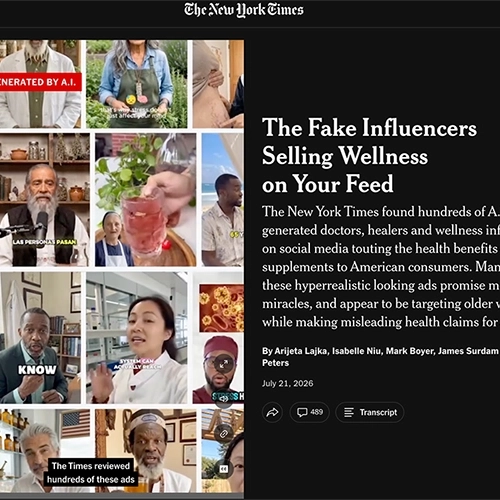
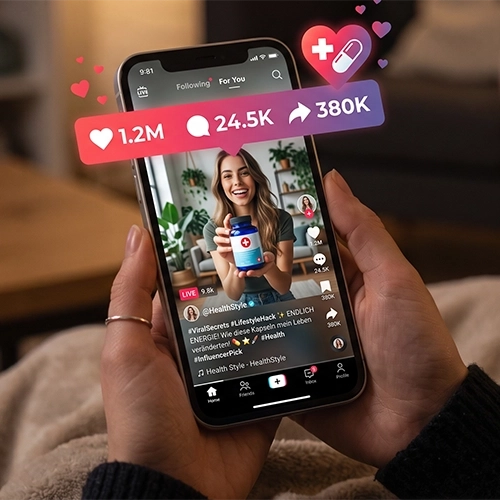
As patients increasingly turn to unconventional sources such as TikTok or AI models for information, the demands placed on pharmaceutical companies to provide educational materials are rising dramatically.
Marta Nowotarska, Director of Consumer Engagement at Novo Nordisk, at the HLTH Conference
Regulatory Headwinds and Digital Gray Areas
However, the growing interdependence of digital reach and pharmaceutical marketing is increasingly drawing the attention of regulatory authorities. Following a controversial commercial aired by the telemedicine company Hims & Hers during the 2026 Super Bowl, the U.S. Food and Drug Administration (FDA) stepped up its oversight. Under the policy directive to curb misleading DTC advertising, over one hundred warning letters and cease-and-desist orders were issued to pharmaceutical companies. A key focus of the FDA’s current research is the extent to which financial disclosures—such as in the case of Williams, whose husband holds shares in Ro—influence consumers’ credibility and perception of risk.
Additional complexity arises from the geopolitical borderless nature of social media. Campaigns such as the one by U.S. media personality Khloé Kardashian for the migraine medication Nurtec ODT (Pfizer) reach hundreds of millions of users worldwide via platforms like Instagram. Although these posts are legal in the U.S. and labeled as sponsored content, they are also accessible in regions with strict DTC advertising bans, such as the European Union or the United Kingdom. In June 2026, the British regulatory agency MHRA responded with explicit warnings to companies, as there was an increase in the direct marketing of unlicensed obesity treatments and prescription drugs to end consumers in the digital space.
Europe: Implementation Delays and Social Stigmatization
While the U.S. market is characterized by high market penetration, European healthcare systems show shortcomings in the integration of medical innovations. The example of GLP-1 medications highlights a transatlantic divide: While approximately 10% of eligible patients in the U.S. have access to these therapies, the rate in Europe is only 2 to 3%.
The causes of this are primarily related to communication and structure:
- Patient Stigma: Data from the digital weight loss clinic Voy show that 55% of European patients who use medication to treat obesity keep this a secret from their immediate social circle (including their partners).
- Institutional barriers: In countries such as Germany, obesity is legally defined primarily as a consequence of personal lifestyle choices and is not a standardized core component of medical education. This leads to gaps in knowledge among healthcare providers and limits reimbursement eligibility by health insurance companies.
Strategic Consistency in Pharmaceutical Communications
The ongoing consumerization trend means that patients are independently seeking out information via social media or large language models (LLMs). If the established pharmaceutical industry fails to serve as a reliable partner in this unregulated information space, there is a risk that patients will turn to unverified alternative products or illegal online sources.
What does this mean for pharmaceutical communications?
The use of high-profile brand ambassadors, transatlantic market disparities, and the digital circumvention of national advertising bans are not, in and of themselves, new phenomena in pharmaceutical communications. Rather, the current relevance of the debate stems from the fact that the global hype surrounding GLP-1 drugs acts as a magnifying glass, exposing long-standing structural problems.
Ultimately, what matters remains the same: Effective pharmaceutical communication does not depend on the reach of a social media channel, but on the ability to build trust through transparency and scientific validity. This helps break down societal barriers and creates the conditions necessary for therapeutic advances to be reliably integrated into standard medical care.
“We must make a conscious effort to build trust on both an individual and collective level. It doesn’t matter how innovative our products are—if we don’t nurture that trust, these innovations will never reach patients.”
Meadhbha Monaghan, Director of the Patient Client Council (PCC) NI, at HLTH Europe